••
news
Where altnets are rolling out next


More from the blog
Browse all guides →
Compare at your address
See deals at your address
Drop in your postcode for the live shortlist, speeds, prices, and which providers actually reach your line.
news
Compare at your address
Drop in your postcode for the live shortlist, speeds, prices, and which providers actually reach your line.
Altnets are independent full-fibre networks built to compete with Openreach and Virgin Media. They now cover 19.7 million UK premises between them. As of June 2026 the growth is mostly infill: deeper building in existing footprints, subsidised rural work under Project Gigabit and a wave of consolidation. For your street, the only reliable answer is a postcode check.
That last line is doing the heavy lifting, so let's say it plainly. No altnet publishes a dependable street-by-street build schedule. Plans shift with funding, planning permission and contractor availability, which is why altnet maps are drawn in pencil and announced in bronze. What follows is the verified state of play as of June 2026, not a promise that a digger is coming to your road.
Industry body INCA says altnets now cover 19.7 million premises with more than 3.5 million live connections, as of March 2026. That coverage overlaps heavily with Openreach (22.36 million full-fibre premises as of April 2026) and with Virgin Media's cable network. Around 90.8% of UK premises can already order a gigabit-capable connection. So the question this year is rarely "will fibre exist here" and increasingly "whose fibre, at what price, under which owner".

CityFibre is the altnet most people will actually meet, because you buy it through brands you already know. Vodafone, Sky, TalkTalk and Zen all sell broadband over its network, alongside dozens of smaller ISPs. In June 2026 it passed one million customers and its network now reaches nearly five million premises.
The telling move came a month earlier. CityFibre holds ten Project Gigabit contracts carrying roughly £920m of subsidy. In May 2026 it agreed with BDUK to re-scope them, cutting the subsidised build to about 226,000 premises (around 450,000 in total across the contract areas by 2030). The reason is almost a compliment: its commercial build had already overtaken places the subsidy was meant to reach. The translation for your postcode is that CityFibre will keep thickening its existing city footprints rather than appearing somewhere entirely new.
Netomnia, the network behind YouFibre, had passed 3 million premises ready for service with 445,000 customers by February 2026. That same month the owners of Virgin Media O2 and nexfibre agreed a £2bn deal to buy it, expected to complete later in 2026 pending regulatory approval. The build carries on in its existing regions meanwhile, with roughly 3.4 million premises expected by completion. After that, Netomnia's future sits inside nexfibre's wider plan, which includes upgrading 2.1 million Virgin cable homes to full fibre, the majority by the end of 2027.
Hyperoptic covers about 1.9 million homes across 64 towns and cities, mostly apartment blocks. Its next act is the quiet kind: from 2026 it is extending its reach over Openreach's network through a wholesale deal. So Hyperoptic "arriving" in your area may involve no new digging at all, just its service running over a line that was already under your pavement. Owner KKR is reportedly exploring a sale, which is worth knowing before you lean too hard on any of its long-term plans.
Not everyone is expanding. Virgin Media and nexfibre's own build largely stalled in the first quarter of 2026, adding about 6,400 premises against 115,000 the quarter before. Gigaclear, the rural specialist, started the year with creditors reportedly set to take control, so treat any Gigaclear expansion talk cautiously until the ownership question settles. Community Fibre still builds only in London, covering all 33 boroughs. Its backer is reportedly weighing a sale too.
Here is the honest bit. There is no verifiable street-level list of "next towns" for June 2026 and we are not going to invent one. The general geography looks like this. CityFibre densifies its existing cities plus its slimmed-down Project Gigabit areas. Netomnia builds in its current regions while the merger clears. Hyperoptic grows over Openreach lines. Rural gaps increasingly go to Project Gigabit contractors, including Openreach itself, which took the North Shropshire contract in April 2026.
Which is a long way of saying: check your postcode. Your address either has an altnet now, sits inside a signed build contract or doesn't. No amount of press-release reading changes which of the three you are.
If a checker says full fibre is already live at your door, the question stops being industry gossip and becomes a shopping decision. It pays to understand FTTP, FTTC, cable and 5G: broadband types explained before you commit, because FTTP changes more than the headline number. Matching the package to What broadband speed do I actually need? keeps the monthly bill tied to what the household actually does online, while the latest Full Fibre Broadband Deals and Gigabit Broadband Deals deals show what these networks cost this month.
An alternative network: a broadband provider that builds its own full-fibre infrastructure instead of renting Openreach's. CityFibre, Netomnia, Hyperoptic, Community Fibre and Gigaclear are the big names. Together they cover 19.7 million premises as of 2026, often overlapping Openreach and Virgin Media on the same streets.
CityFibre is wholesale-only, so you never buy from it directly. The big consumer names on its network are Vodafone, Sky, TalkTalk and Zen, joined by dozens of smaller ISPs. A postcode check with any of them will tell you whether your address is covered.
Not mid-contract: your existing terms carry over when a provider is bought. Longer term, consolidation usually means fewer aggressive challenger prices, which is exactly why CityFibre wants the competition regulator to examine the Virgin Media O2 and Netomnia deal before it completes later in 2026.
Slowly, yes. Project Gigabit subsidises builds where commercial rollout doesn't add up, with contracts held by CityFibre, Openreach and various regional altnets. Coverage is decided contract by contract though, so a postcode check beats any national map for telling you when your village is actually due.
Press releases describe the network they want; a postcode check describes the one you can buy.
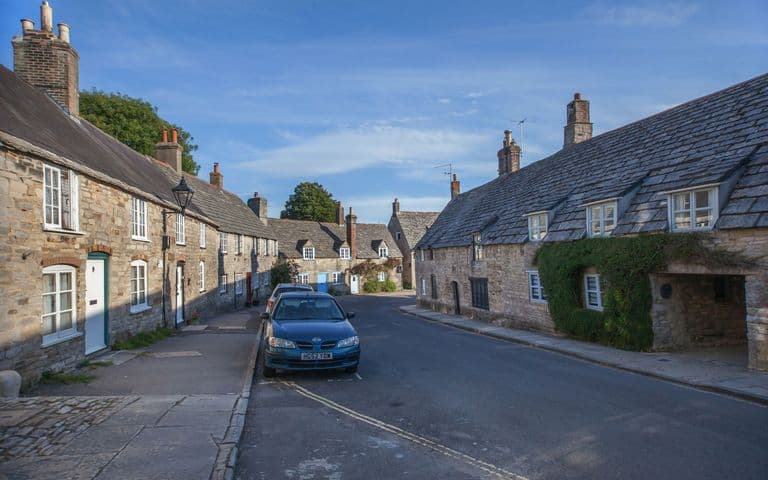
Dorset averages 72.2% full fibre, but eight of its villages are still stuck at zero. This is who is missing out, why they are last and what residents can do about it.