news
New tariffs this month


The biggest recent broadband launch is Vodafone 5G Broadband, which arrived on 11 May 2026 and opens fixed-wireless home internet to around 3.7 million more UK homes. Community Fibre ran a 25% price-cut promotion that ended on 3 June. As of June 2026, no major new consumer tariff has launched this month.
That last sentence matters. Most pages tracking new broadband deals will tell you something enormous launched this week, because a page that admits nothing happened doesn't get clicked. We'd rather be straight with you. The genuinely notable launches landed in May and one of them is properly significant.
On 11 May 2026 Vodafone launched its first 5G home broadband service. It works over the mobile network, so there's no fixed line, no engineer and no install date circled on the calendar. The hub arrives in the post, you plug it in and you're online.

At launch in May 2026, pricing started at £21 a month on a 24-month term for the entry 50Mbps tier or £30 a month on a 30-day rolling plan, with speeds of up to 150Mbps where the 5G signal is strong. Those are the launch figures rather than a standing promise, so check what Vodafone is charging now before you budget around them. Vodafone says it opens "full-fibre-like speeds" to a further 3.7 million homes that can't yet get a decent fixed line. An indoor hub comes as standard and there's an outdoor unit option for homes where the signal needs help.
Is it new or a repackage? Genuinely new. This is Vodafone's first proper 5G home product, which makes the main players in 5G home broadband Three, EE and Vodafone. The 30-day option also puts it firmly among the No-Contract & Rolling Broadband Deals choices, which used to be a thin field.
In May, Community Fibre cut prices by 25% across its 24-month plans: 100Mbps for £17.10 a month, 1Gbps for £22.50 and 5Gbps for £47.25. The promotion ended on 3 June 2026. We mention it because it shows how quickly London's altnet pricing moves, not because you can still get it. You can't. For what's actually live today, check the current Cheap Broadband Deals listings instead of a screenshot of last month.
Nothing this spring has knocked Sky off the top. Sky launched its 2.5Gbps and 5Gbps full fibre tiers over CityFibre back in July 2025, complete with a wifi 7 hub. As of June 2026 it remains the fastest package from a big-name provider. CityFibre switched on an 8.5Gbps wholesale tier in March 2026, so expect retail providers to start selling something faster before long. If multi-gig is the goal, the current Gigabit Broadband Deals options are the place to compare.
Not every change in May was good news. Starlink unexpectedly raised its UK satellite broadband prices that month. If you're rural enough to be weighing up satellite, it's worth checking first whether 5G home broadband or a subsidised fibre build now reaches you, because the maths has shifted.
Weighing 5G against full fibre is really a question of what your household needs. We've broken down how the technologies actually differ and What broadband speed do I actually need? will tell you whether 150Mbps is actually enough for your home.
It's good where the signal is good. Expect roughly 100Mbps to 300Mbps down on a strong 5G connection, with lower uploads and more variation at busy times. Full fibre is more consistent. If fibre hasn't reached your street yet, 5G is a sensible stopgap rather than a compromise.
Among the big brands it's Sky's 5Gbps tier, sold over CityFibre since July 2025. Some altnets go further within their own footprints and CityFibre opened an 8.5Gbps wholesale tier in March 2026, so faster retail packages are likely to follow.
Vodafone's new 5G service includes a 30-day rolling option. Three and EE sell flexible 5G plans too. Some fixed-line providers offer no-contract deals at a higher monthly price, so compare both routes before assuming mobile broadband is the only flexible one.
Ask what actually changed. Vodafone's 5G launch was a new product on new infrastructure. Community Fibre's May price cut was the same tariffs with a temporary discount, which is why it could vanish on 3 June. If only the price moved, it's a promotion, not a launch.
We'll refresh this page when the next launch lands. If nothing launches, we'll tell you that too.
More from the blog
Browse all guides →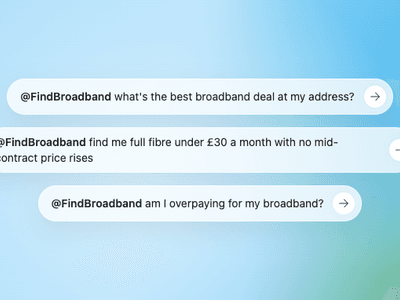
Ask ChatGPT about your broadband bill. It now asks us.
FindBroadband is now a ChatGPT plugin and an open MCP endpoint, so any AI assistant can check the deals at your address and tell you whether you are overpaying, using our numbers, not its own.

The Dorset areas still stuck without full fibre
Dorset averages 72.2% full fibre, but eight of its villages are still stuck at zero. This is who is missing out, why they are last and what residents can do about it.
What Ofcom is doing this quarter
Ofcom's spring changes explained: complaints can go to the ombudsman after six weeks, automatic compensation now pays £10.34 a day and the five-year Openreach rulebook is set. What each change means for your broadband bill.

Where altnets are rolling out next
Altnets now cover 19.7 million UK premises and 2026 is the year of infill, mergers and subsidised rural builds. Here is where CityFibre, Netomnia and Hyperoptic are building next and why a postcode check beats any map.
Compare at your address
See deals at your address
Drop in your postcode for the live shortlist, speeds, prices, and which providers actually reach your line.
Two upgrades worth knowing if you or someone in your household receives Universal Credit or a similar benefit. In April 2026 Community Fibre doubled its £12.50 Essential tariff to 70Mbps symmetric, with a sign-up window that ran to 6 May. In February 2026 Hyperoptic refreshed its Fair Fibre range: 50Mbps for £12, 150Mbps for £13, 500Mbps for £17 and 1Gbps for £20. Social tariffs typically carry no mid-contract rises and no exit fees, which makes them the rare corner of this market with nothing buried in the small print. The full current list sits on Ofcom's social tariffs page.