news

Compare at your address
Drop in your postcode for the live shortlist, speeds, prices, and which providers actually reach your line.
Full fibre reaches 72.2% of Dorset. That sounds respectable. Across most of the county it is.
In eight Dorset localities, availability is below 1%. Six have none at all.
Both figures come from Ofcom’s Spring 2026 update, based on coverage data from January 2026. There is no contradiction. One number describes Dorset as a whole. The other describes what people can order where they live.
County averages measure progress. Addresses decide whether you can buy it.
The list is short. If you live in one of these places, the rest of this is for you.
Full-fibre availability sits below 1% in eight Dorset localities. Six are recorded at exactly zero.
That is not a rounding error. Ofcom’s January 2026 data showed no full-fibre service available to any measured premises in those six places.

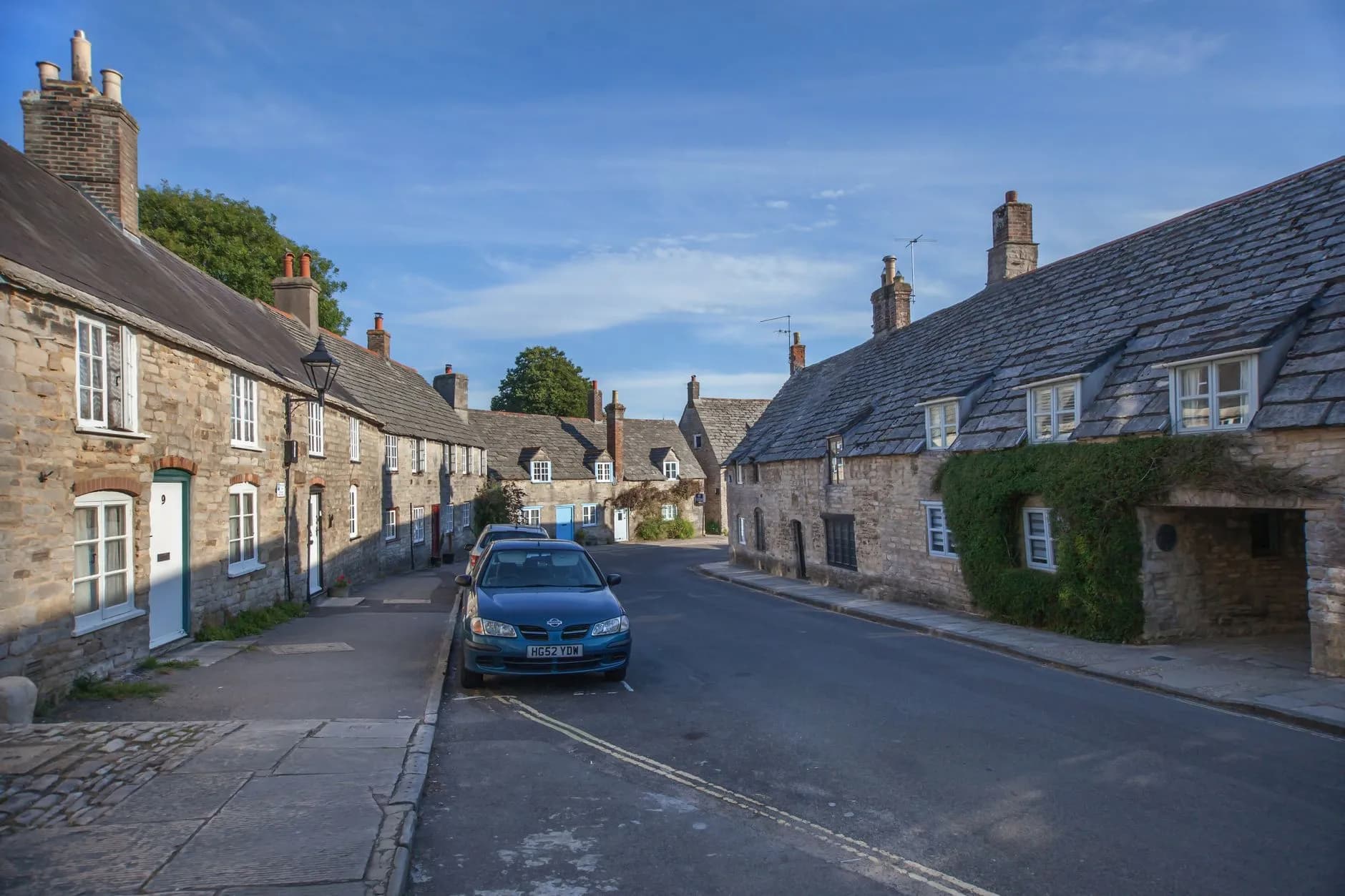
The largest is Bere Regis, where 442 connections sit on nothing faster than a part-copper line. Worth Matravers, out on the Purbeck coast, has 154. Abbotsbury, under its hill and its famous swannery, has 91. None of these is remote in any dramatic sense. They are ordinary Dorset villages.
Beacon Hill is the one that stands out, and not in a way anyone would want. It is at zero for full fibre, like the rest. It is also at 36.2% for superfast, the older fibre-to-the-cabinet service that reaches almost everywhere else on this list. On both counts it is the worst-connected place in the county. The problem there is not old copper. It is not enough of anything.
Locality | Full fibre | Connections |
|---|---|---|
Bere Regis | 0% | 442 |
Burton Bradstock | 0.3% | 311 |
Morcombelake | 0.6% | 156 |
Worth Matravers | 0% | 154 |
Owermoigne | 0% | 118 |
Nether Compton | 0% | 92 |
Abbotsbury | 0% | 91 |
Beacon Hill | 0% | 82 |
Across the eight, that is 1,446 connections that cannot buy full fibre today. The table hides one more thing. None of these villages has Virgin Media cable either, so zero full fibre also means zero gigabit of any kind. Beacon Hill aside, though, these are not places without internet. Most run between 85% and 100% superfast. The fibre reaches a green box at the end of the road at full speed. Then it stops, and copper carries the last stretch to the house and the copper is the part that decides how fast the line actually goes.
Below the six zeros sits a wider group where full fibre technically exists but reaches very few premises. Under 10% is not close to completion. It means a handful of properties can order full fibre while most of the village cannot. The fibre is present. It is simply present somewhere else.
Maiden Newton and Studland both sit at 2.7%. Portesham is at 3.5%. Chetnole reaches 5.9% followed by Leigh at 7.8%, Thornford at 8.3%, Winterborne St Martin at 8.8% and Post Green at 9.4%.
Add these places to the first eight and Dorset has 16 localities below 10% full-fibre availability. Together they contain around 2,959 premises. Almost all are still waiting. Coverage improves above that point but not quickly. Charmouth is at 14.6%, leaving about 570 premises without full fibre. Tolpuddle is at 19.3%.
The largest gap is not in a village. It is in the DT6 postcode district around Bridport. DT6 contains 7,371 premises and has full-fibre availability of 40.2%. That leaves about 4,400 premises without it. No other part of Dorset has as many missing full-fibre connections in one postcode district. This is what the county average hides. Dorset can move from 70% to 72% while thousands of premises in the same handful of places see no change at all.
Dorset already sits a little behind the country. Full fibre reaches around 82% of UK homes now and 72.2% of Dorset. That gap is not spread evenly, and villages like these are where it collects.
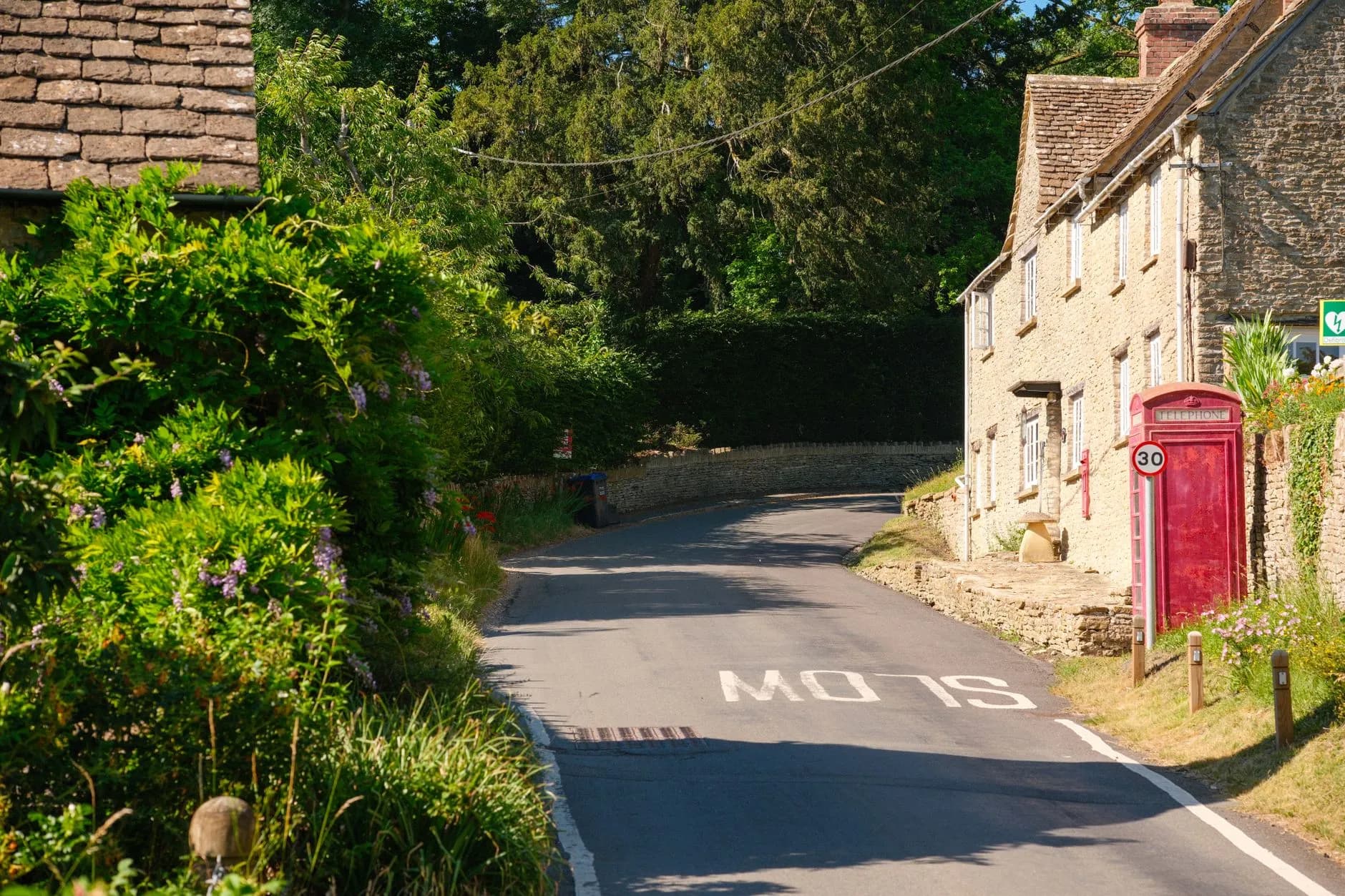
Fibre gets built where the sums work first. That is not a conspiracy. It is arithmetic. Run a cable past one dense street and a single build connects a hundred premises and it pays for itself quickly. Run the same fibre a mile down a Dorset lane to reach a dozen scattered farmhouses and it does not, at least not on a commercial timetable. So the commercial builders, Openreach included, take the cheap premises first and leave the expensive ones for later. Every village on this list is one of the expensive ones.

That is exactly why the expensive ones get a subsidy. Project Gigabit is the government programme that pays a provider to build where the market will not, and Dorset holds two of its contracts. The larger one, for Dorset and South Somerset, was signed in March 2024. It gives Wessex Internet £33.5m to reach around 21,400 hard-to-reach premises. An earlier £6m contract for North Dorset, signed on 25 Aug 2022, covers over 7,000 more.
Wessex Internet is worth knowing about if you are on this list. It is a family-run rural network, the sort that builds down exactly the kind of lane the big providers skip. Its full fibre starts at £29 a month, and it has already built full fibre into Dorset villages including Milton Abbas, Marnhull, Shroton and Winterbourne Stickland. If your village is not on its map yet, the honest answer is that it might be, and there is a way to make that more likely.
Start by checking your own address rather than the county figure. Availability moves street by street, and the household two lanes over may already have an order date you do not. The checks that tell you whether you can get full fibre at your address take about a minute, and every village named here has its own page showing what is actually on the line there today, Beacon Hill included.
If the answer is nothing yet, the next lever is collective. The Openreach Fibre Community Partnership lets a village pool its demand and put it toward the cost of a build. The government's Gigabit Broadband Voucher Scheme tops that up with vouchers worth up to £4,500 per eligible premises. It is open now, and schemes like it tend to close sooner than the paperwork suggests, so the sensible time to start is early. The scheme is slow and it is bureaucratic, and in a scattered parish it is sometimes the only thing that moves the date at all. A parish council with a list of committed neighbours carries more weight here than any single complaint.
There is a legal floor beneath all of this too. Under the universal service obligation, any home without a decent connection, defined as 10 Mbit/s down and 1 Mbit/s up, can request one, and BT has to deliver it. The catch is the cost. The build is only free up to £3,400 per property, excluding VAT, and beyond that the household is asked to cover the excess, which in deep countryside can run high. It is a floor, not a fast lane. For a home genuinely stuck below the decent-broadband line, though, it is a right rather than a favour.
While the fibre works its way out to you, mobile can carry the gap. A 4G or 5G home hub or a fixed-wireless link from a local provider can be the difference between a working Monday call and a frozen one. Ofcom folds fixed-wireless into its decent-broadband coverage, which tells you it counts. Treat it as a safety net, not the destination. The wire in the ground is still the thing that lasts.
Being stuck on the older fibre-to-the-cabinet line does not mean being stuck on an expensive contract for it. The renewal price on a copper-tail line drifts up every April like everyone else's, and there is no good reason to pay a premium for the slow half of the network. It costs five minutes to check whether you are overpaying for the connection you already have.
None of this changes the list today. What changes it is the Wessex build reaching one more lane or a village deciding to pledge together and pulling its own date forward. Both are real. Both are slow. Neither is a press release. If your address is one of the ones sitting at zero, the useful next move is not to read the county average again. It is to open your own village page, look at the real number, and decide what to do with it. That is a smaller thing than a £33.5m contract. On your street it is the thing that matters.
Sources: Ofcom Connected Nations update, Spring 2026 (published 13 May 2026, data to January 2026); the Project Gigabit contract pages on gov.uk; Ofcom's universal service obligation guidance; and Dorset Council's Digital Dorset pages.
Altnets now cover 19.7 million UK premises and 2026 is the year of infill, mergers and subsidised rural builds. Here is where CityFibre, Netomnia and Hyperoptic are building next and why a postcode check beats any map.