news
Major outages this month


If your broadband is down right now, start with what matters. As of June 2026 there is no major nationwide outage at any big UK provider. Check your provider's status page, test on a wired device, then report the fault. If a total loss of service isn't fixed within two full working days, most providers owe you £10.34 a day automatically.
You can usually tell an outage by the way it arrives. The Monday call freezes mid-sentence, somebody announces the wifi is broken and you spend ten minutes restarting a router that was never the problem. This page tells you whether the fault is yours or theirs and exactly what you're owed either way.
No. As of 12 June 2026 we can't verify a single national incident at a major provider this month. The outage trackers show the usual background noise, around 25 user reports for BT across a whole day when we checked, which is a quiet Thursday rather than a crisis. That doesn't mean nobody is offline. A street cabinet failure feels exactly like a national meltdown when it's your street.

This is a living page. When something big breaks, the details land here with dates attached, because an outage report without a date is just a rumour.
Work through this before you sit on hold.
- Rule out the wifi. Plug a laptop into the router or stand right next to it. If everything works up close, the line is fine and the problem is your wifi, which is fixable tonight rather than reportable tomorrow.
- Check your provider's status page. Every major ISP runs one, usually with a postcode checker. Our own live outage checker does the same job across providers without making you log in.
- Ask a neighbour on the same provider. Two houses down on the same network is a better diagnostic than any app.
- Report it anyway. The compensation clock starts when you report the fault, not when the fault started. Telling the group chat doesn't count.
Ofcom runs an automatic compensation scheme and the rates went up on 1 April 2026. If a total loss of service isn't fixed within two full working days of you reporting it, you get £10.34 for each full day it stays broken. A missed engineer appointment pays £32.31. A delayed activation pays £6.46 a day. The credits land on your bill automatically, so there's no form, no claim line and no Dave from Retention to get past.
The scheme is voluntary but the big names are in: BT, EE, Plusnet, Sky, NOW, TalkTalk, Virgin Media, Vodafone, Zen, Hyperoptic and Utility Warehouse, covering roughly 91% of UK broadband customers. Rates rise with CPI every April, so check Ofcom's automatic compensation page for the current figures. If your provider isn't on the list, you're relying on goodwill, which in this industry is not a plan.
The year hasn't been fault-free. The most recent verified incidents, dated:
- TalkTalk, 25 March 2026. A national outage from around 7am. Lines stayed up but DNS failed, so anyone on a VPN or third-party DNS sailed on obliviously while everyone else stared at error pages. Service was restored the same morning and TalkTalk apologised for "a short network issue", per ISPreview's report.
- Orkney, March 2026. A subsea cable break knocked out broadband and mobile for part of the islands, a reminder that some of the UK's internet still arrives by ship-laid cable.
- EE, February 2026. Customers on the 1.6Gbps top tier suffered a sharp speed loss, some down to 50 to 70Mbps. Paying for the fastest package on Openreach and receiving 2015 instead.
- Wildanet, January 2026. Storm Goretti caused outages at multiple sites across south-west England, including a cabinet power cut in Germoe that took 152 subscribers offline.
One pattern worth knowing: analysis reported by The Register on 11 March 2026 found Scotland suffers more broadband disruption than any other part of the UK. If that's you, the compensation rules above matter twice as much.
If your connection is up but limping, the fix is usually closer to home. Start with Why is my broadband slow? How to find the cause or run a Wi-Fi speed test: how to do it and read the result to prove where the bottleneck sits. If nothing loads at all, work through When you've got no internet at all step by step before you pick up the phone. And if this month's fault was the final straw, it's worth seeing what Full Fibre Broadband Deals costs before you ring up to cancel.
Test on a wired device first to rule out wifi. Then check your provider's status page or app, which usually includes a postcode checker. Our live outage checker covers the major providers in one place. If neighbours on the same network are down too, it's an outage rather than your kit.
Yes, if your provider is in Ofcom's automatic compensation scheme and the fault is a total loss of service. From 1 April 2026 the rate is £10.34 per day once two full working days have passed since you reported it. It arrives as a bill credit without you asking.
Two full working days from the moment you report a total loss of service. After that, automatic compensation of £10.34 a day applies for every full day you stay offline. Report faults through official channels, because the clock only starts when the provider logs it.
No national outage this month, then. Your router, as ever, remains the prime suspect.
More from the blog
Browse all guides →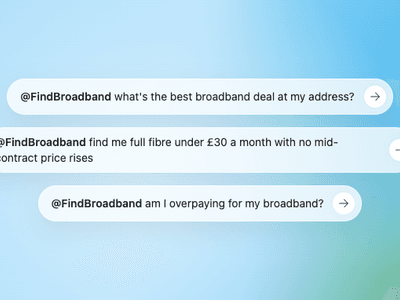
Ask ChatGPT about your broadband bill. It now asks us.
FindBroadband is now a ChatGPT plugin and an open MCP endpoint, so any AI assistant can check the deals at your address and tell you whether you are overpaying, using our numbers, not its own.

The Dorset areas still stuck without full fibre
Dorset averages 72.2% full fibre, but eight of its villages are still stuck at zero. This is who is missing out, why they are last and what residents can do about it.
What Ofcom is doing this quarter
Ofcom's spring changes explained: complaints can go to the ombudsman after six weeks, automatic compensation now pays £10.34 a day and the five-year Openreach rulebook is set. What each change means for your broadband bill.

Where altnets are rolling out next
Altnets now cover 19.7 million UK premises and 2026 is the year of infill, mergers and subsidised rural builds. Here is where CityFibre, Netomnia and Hyperoptic are building next and why a postcode check beats any map.
Compare at your address
See deals at your address
Drop in your postcode for the live shortlist, speeds, prices, and which providers actually reach your line.