••
switching
Uswitch Alternative: Why People Switch and What They Use Instead

switching
Uswitch is good at one job. If you want to compare your energy, your insurance, your broadband, your mobile and a credit card in one afternoon, it is a competent place to do all of it at once. It is also where most people in Britain have typed in a postcode and trusted the order the results came back in, without once asking who decided that order.
For broadband on its own, that trust is the thing worth a second look. This page is about why people go looking for a Uswitch alternative, what is actually different and when Uswitch is still the right call. We compare broadband for a living too, so read the next part with that in mind.
Comparison sites are paid commission by providers when you switch, and we are no exception. The question that matters is whether the commission decides the order you see. Ofcom takes that question seriously enough to run an audit for it. Its accreditation scheme checks that a site is "accurate, transparent, comprehensive and up to date," and a handful of broadband and mobile sites have passed it. Uswitch is not one of them. It is accredited for energy instead, under a separate scheme run by Ofgem, which is a different product and a different regulator.
A "best deal" badge with no published method behind it is just a rosette the site pinned on itself. Our order is first-year cost at your address, and the method is written down so you can check we mean it. Sorry, Uswitch.
This one is not our accusation. It is Uswitch's own description. In its words it lists "as many suppliers and products on the market in our comparisons as possible," and it concedes that "some suppliers have removed themselves from all price comparison websites, choosing instead to sell directly." Translated, that means the cheapest line at your postcode might be a provider that simply is not in the results.
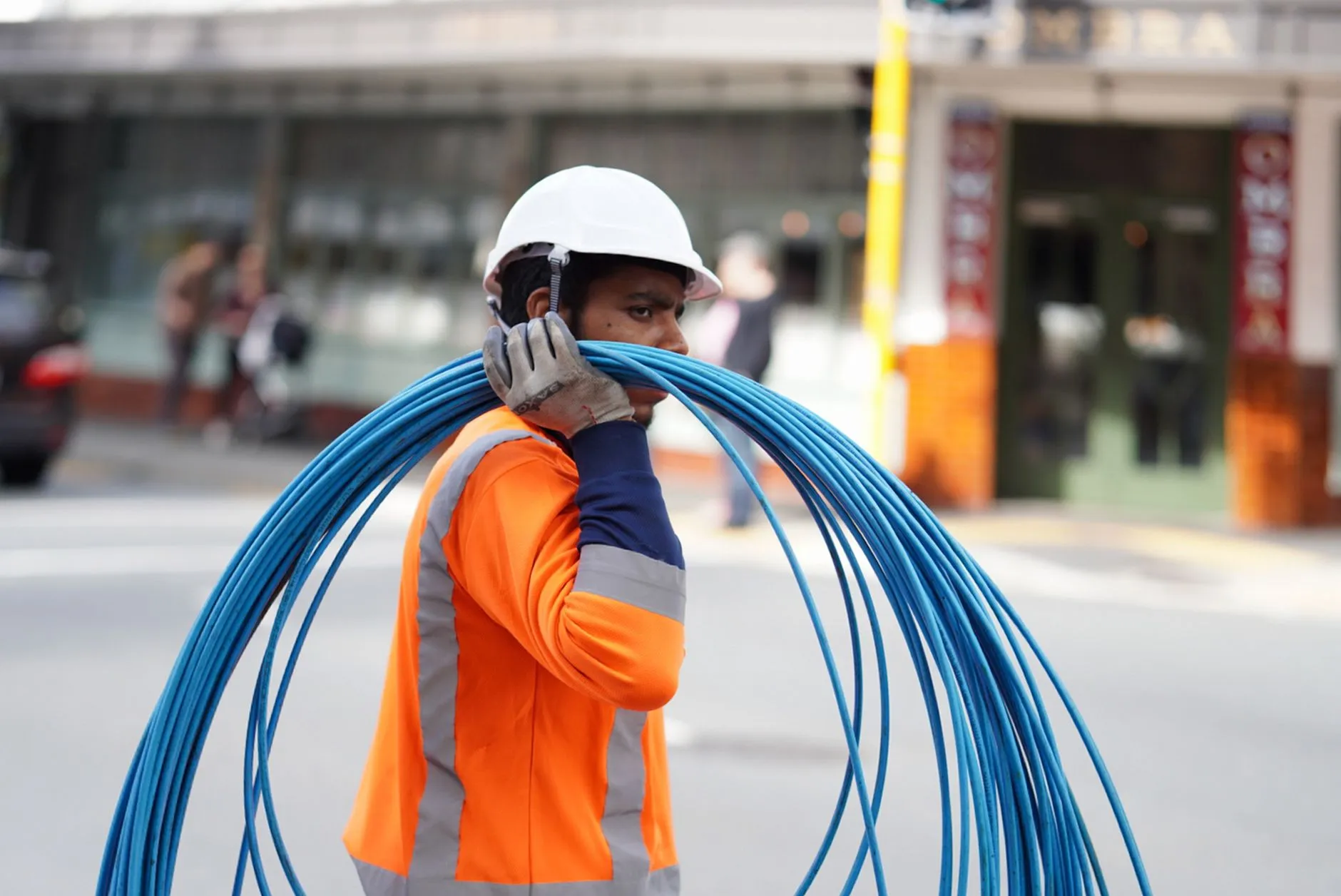
At a lot of UK addresses that line is a local full-fibre network undercutting the household names by the price of a Freddo a day. A connection like Community Fibre's runs about £14 a month with no mid-contract rise, and it is the sort of deal that never reaches a national table. Whether you can get one at all is decided street by street, not nationally, which is exactly the detail a whole-of-market check is for.
You sort by price. Then every April the price goes up, because most broadband contracts carry a clause letting the provider raise it mid-term. Around four in five contracts have one. If that clause is not sitting next to the headline figure, the figure is fiction with a decimal point.
This is why your bill climbed while your service stayed exactly the same. Ofcom reckons people who have drifted past their initial contract pay roughly 20% more than they need to. The fix is dull and it works: show the rise rule before the click, not three tooltips deep. A short list of providers skip the April rise entirely, and you only find them if the comparison admits they exist.
If you are leaving Uswitch, the honest question is "for what." Match the alternative to the job in front of you.
You want the genuinely cheapest line at your address, altnets included. That is us, and yes, we would say that. The ranking is first-year cost at your postcode, the local networks are in the mix and the price-rise clause is on the card before you commit.
You want an independently audited site with a big name behind it. MoneySuperMarket is Ofcom-accredited for broadband, and Broadband Genie is an accredited broadband specialist. Both have sat the audit Uswitch has not.
You already know which provider you want. Go direct to them. Some sell only through their own site anyway, and you skip the middle layer entirely.
You want one place for broadband, energy, insurance and a SIM. Stay where you are. More on that next.
Three situations where Uswitch is the sensible choice, no caveats buried in the small print.
First, when you are comparing more than broadband. Uswitch covers energy, insurance, mobile and credit cards under one login, and it is Ofgem-accredited on the energy side. For a whole afternoon of household admin, that breadth is genuinely the point.

Second, when you only want the mainstream names. If you would never sign with a network you had not heard of, the missing altnets cost you nothing, and the big brands are all present and correct.
Third, when you have used it for years and trust it. Familiarity has a value, and changing tools has a small cost. We are not going to pretend otherwise to win an argument.
It is three steps, and none of them involve a phone call.
Question | Uswitch | FindBroadband |
|---|---|---|
Who owns it? | RVU, after Red Ventures and Silver Lake bought it from Zoopla in 2018 | Independent, founder-run |
How does it make money? | Commission when you switch | Commission when you switch |
Ofcom-accredited for broadband? | No. Accredited for energy, via Ofgem | No |
Does it claim to show every provider? | No, "as many as possible" in its own words | No site does, but built to surface local altnets |
Both of us earn commission, and neither of us is Ofcom-accredited for broadband. We are newer and smaller, and we would rather you judged us on the published method and what is in the results than on a badge we have not yet earned. The difference that matters is what is shown and what is included, not who has the bigger logo.
Is Uswitch independent? It is owned by RVU, the group behind Confused.com and Money.co.uk, after Red Ventures and Silver Lake bought it from Zoopla in 2018. It earns commission when you switch. Independent of any single provider, yes. Free of a commercial interest in the outcome, no, and no comparison site is.
Is Uswitch Ofcom-accredited for broadband? No. Uswitch is accredited for energy under Ofgem's scheme, a different regulator and a different product. On Ofcom's broadband list the accredited names are MoneySuperMarket, Broadband Genie and a few specialists. The scheme is voluntary, so the absence means Uswitch has not sat the audit, not that it failed it.
How does FindBroadband make money, then? Commission, same as everyone. We make money when you switch through us, and we will tell you which of our arrangements would have to change before any of this stopped being trustworthy. What the money does not touch is the order of the results, which is first-year cost at your address and nothing else. Could a provider ever pay us to bury a bad review? Probably. Everything has a price. We would just rather tell you that than pretend we are a charity.
Will switching cut me off? No. Under One Touch Switch you contact only the new provider and they run the handover, with no gap in service. There is no final phone call where Dave from Retention talks you through four better offers he could have given you all along.
Does Uswitch show every broadband deal? No, and it says as much. It lists as many as it can, but some providers sell only through their own sites and never appear on any comparison site. At plenty of addresses, that includes the cheapest line on the street.
Use Uswitch when you are comparing half your household bills in one sitting. For broadband on its own, use the tool that shows the cheapest line at your exact address, names the local networks and puts the April price rise where you can see it before you sign. Then switch, and let the new provider do the paperwork while you get on with your day.
Deals from the providers mentioned in this guide.
Compare at your address
Drop in your postcode for the live shortlist, speeds, prices, and which providers actually reach your line.
A quick comparison of the providers discussed in this guide.
| Provider | Type | Details |
|---|---|---|
Community Fibre | Provider | View deals → |
4th Utility | Provider | View deals → |
toob | Provider | View deals → |
Vodafone | Major provider | View deals → |
Rise Fibre | Provider | View deals → |
Ogi | Provider | View deals → |
Compare at your address
Drop in your postcode for the live shortlist, speeds, prices, and which providers actually reach your line.



Go Compare runs a real broadband comparison, but it is an insurance site at heart, partner-panel not whole-of-market and not Ofcom-accredited for broadband. Why people look elsewhere, the alternatives, and when Go Compare is still the right call.

Switching providers is simple on the same network and a different shape across networks. Openreach takeovers vs Virgin, CityFibre and Hyperoptic installs, and what One Touch Switch covers.

A switch that failed or started late earns you money: £6.46 a day for a delayed start, £10.34 a day for lost service. The complaint wording and how to escalate to the ombudsman.
What your final broadband bill should show after switching: refunds for unused days, the router-return rules, and the charges worth challenging.
Compare at your address
Drop in your postcode for the live shortlist, speeds, prices, and which providers actually reach your line.