switching

Compare at your address
Drop in your postcode for the live shortlist, speeds, prices, and which providers actually reach your line.
Switch day is the most anticlimactic day in broadband. You ordered the new service a couple of weeks ago, a router arrived in the post on Thursday, and at some point today your line will quietly stop belonging to one company and start belonging to another. Nobody knocks. Nothing beeps. In most households the only evidence is a wifi network with a new name and a partner asking why the printer has stopped working.
One Touch Switch is the Ofcom process that has handled UK broadband and landline switches since 12 September 2024. You only deal with your new provider, the switch itself can complete in a single day, any break in service should last no more than one working day, and automatic compensation applies if things go wrong.
That covers the headline. The rest is the hour-by-hour version, including the one hour that occasionally misbehaves. If you are still at the comparing-deals stage, start with how to switch when your contract is up and come back once you have a switch date in the diary.
One Touch Switch, OTS to the industry, is the switching process Ofcom turned on across the whole market on 12 September 2024. The rule that matters is simple: you only ever contact your new provider. They tell your old one. The old one automatically sends you switching information, which covers any early termination charges and what the switch means for other services on your account. You confirm with the new provider, and from that point they manage the whole move. At no stage do you ring your old provider's retention desk, which means at no stage do you explain yourself to Dave from Retention, who has a script, a discount he was saving and all afternoon.

It covers residential broadband and landline, and it works regardless of which network either provider sits on. Openreach to Openreach, Openreach to Virgin Media, altnet to altnet. Ofcom says more than 300 providers are signed up. Mobile is a separate process with texted PAC codes, and standalone pay-TV sits outside the scheme, but your broadband and any landline on the same account move together.
One housekeeping note, because Google muddles these: this is broadband switching, not a smart light switch. The industry named its flagship consumer reform after a piece of electrical hardware and nobody in the room flagged it.
By the time switch day arrives, the paperwork is behind you. You placed the order. Your old provider sent the switching information. You confirmed, the new provider set a date, and somewhere in a sorting office a router began its journey towards your hallway.
Switch day itself asks almost nothing of you, which is precisely why it unnerves people. Twenty years of broadband admin have trained us all to assume that anything this easy has a catch. There isn't one, mostly. The catch, where one exists, is the handover window, and we will get to it.
The shape of the day depends on whether you are staying on the same network or moving to a different one.
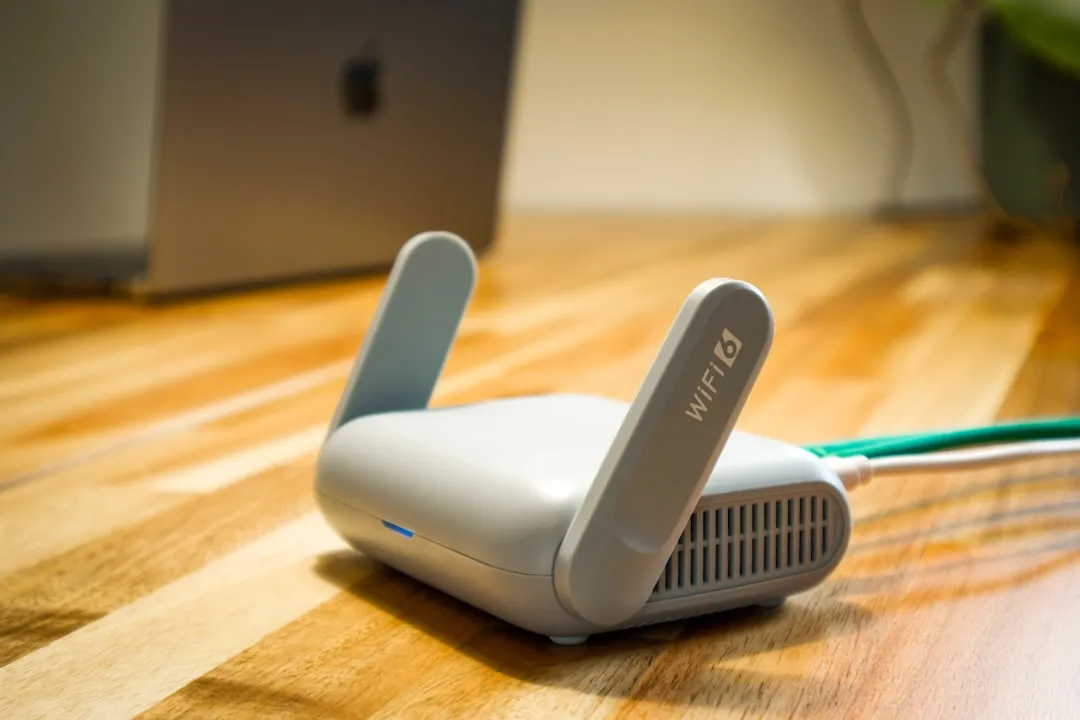
If both providers use the same network, usually Openreach, the switch is generally a remote job. No engineer, no doorbell, no drilling. The line is reassigned behind the scenes, the old service stops, the new one starts, and your entire contribution is to unplug the old router and plug in the new one. Ofcom's position is that the switch can happen in just one day where that is technically possible, and same-network switches are the case where it usually is.
If you are moving between networks, say from an Openreach provider to Virgin Media or to a full-fibre altnet, there is often new kit involved and sometimes a new line into the house, which can mean an engineer visit. The day looks different enough that same-network vs cross-network switching walks through each shape on its own. The short version: cross-network days have more moving parts, and more moving parts means more places for the day to wobble.
Either way, the two ends are coordinated. Under OTS your old service is not cancelled and left to die while a new one gets built next to it. The new provider manages the timing so one service hands over to the other, which is the entire point of the system and the reason the old gap-and-double-bill chaos went away.
There is usually a moment, somewhere in the middle of the day, when the old service has stopped and the new one has not quite started. This is the handover window. It is the bit people fear and the bit that is almost always fine.

The rule: any loss of service during the switch should not exceed one working day. That is the ceiling, not the target. Plenty of switches complete with a gap so short the household never notices, because it happened at 11am on a Tuesday while everyone was staring at a different screen. Plan for an awkward hour, not a lost day.
During the window, plug the new router in, give it time to settle and resist the urge to factory-reset anything. New routers can take a while to sort themselves out on first connection. Make a cup of tea. If the lights are still angry an hour later, you have my permission to start troubleshooting, and if the connection then drops in and out once it is up, the fixes in broadband that keeps disconnecting apply to a new line as much as an old one.
Three failure shapes cover nearly everything.
The delayed start. The promised activation date arrives, the router lights stay stubborn and the new service simply is not there. This is the most common way a switch day disappoints, and it is the one with the clearest compensation attached.
The lost service. The old provider's service stops, the new one does not start, and the gap stretches past the one working day Ofcom allows. You are now a household running entirely on mobile data and goodwill.
The missed engineer. For switches that need an install, the engineer does not turn up, or the appointment is cancelled with less than 24 hours' notice, traditionally after you have spent the morning within sprinting distance of the front door.
There is a fourth, gentler failure: the billing kind, where the switch works but your old provider keeps charging as if nothing happened. That one is a final-bill problem, and we cover it below.
Here is the part that makes OTS more than a convenience. Providers must compensate you if things go wrong with the switch or you are left without service for more than one working day, and under Ofcom's automatic compensation scheme the amounts are fixed and paid without you filling in a single form.
The current rates: £6.46 per day if the start of your new service is delayed, counting the missed start date itself. £10.34 per day if you lose service completely and it is still not fixed two full working days after you report it. £32.31 for an engineer appointment that is missed or cancelled with less than 24 hours' notice. The money arrives as a credit on your bill no later than 30 days after the problem is resolved. The scheme is voluntary, but the big providers are signed up, and the full rates, member list and exclusions sit in the automatic compensation scheme.
If your switch day has already gone sideways and you want the practical sequence, who to report it to, what to say and when to escalate, that is what to do if your switch went wrong.
A short list, assembled in advance, turns a wobbly switch day into a mildly annoying one.
The old router goes in the cupboard with the previous three. The cupboard is not an official part of the process, but every household seems to have one.
The other quiet win in OTS: you do not pay notice-period charges beyond the switch date. Before September 2024, a 30-day notice period could roll on after you had left, billing you for a service you no longer had. Now the old bill stops when the switch happens. No overlap month, no double-billing.
Your final bill should therefore end at the switch date, and anything you prepaid beyond it should come back to you. If it does not, or odd items appear on that last statement, refunds, credits and final-bill shocks goes through what you are owed and what to challenge.
Switch day is one stop on a longer route, and the rest of it lives in the switching hub. If you are still inside your minimum term and wondering whether you can even book a switch date yet, switching while still in contract runs the numbers on leaving early.
You give your details to the provider you want to move to. Your current provider automatically sends you switching information, including any early termination charges and the impact on other services. You then confirm with the new provider and they manage the entire switch, including setting the date. You never contact your old provider at all.
The process itself costs nothing. Any cost comes from your own contract position: if you are still inside your minimum term, early termination charges may apply, and they must be set out in the switching information before you confirm. Out of contract, there is nothing to pay your old provider.
The same thing. One Touch Switch is an industry-wide Ofcom process, not a BT product, so "BT One Touch Switch" just means using the process to join or leave BT. The steps are identical whichever of the 300-plus signed-up providers is at either end.
No. OTS covers residential broadband and landline. Mobile has its own switching process built around a texted PAC code, and standalone pay-TV is not included. If your TV comes bundled with your broadband, the switching information from your old provider must spell out what the switch means for it.
A short gap can be normal, and anything up to one working day is within Ofcom's rules. Give the new router time to settle and lean on mobile data in the meantime. If the promised start date passes with no service at all, report it to your new provider. Automatic compensation of £6.46 per day applies to a delayed start, counting the missed day itself.
A switch that failed or started late earns you money: £6.46 a day for a delayed start, £10.34 a day for lost service. The complaint wording and how to escalate to the ombudsman.